Tractor Colored Icons: A Designer's Real-World Embroidery Review
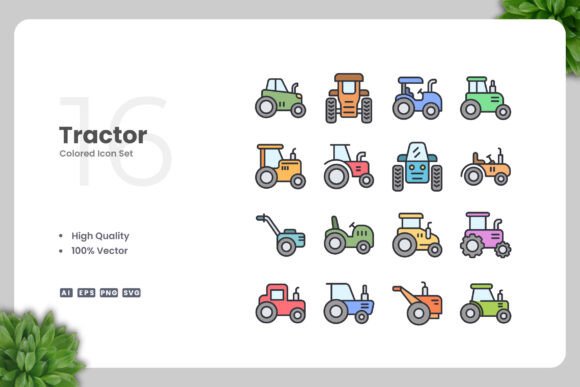
When I first opened the Tractor Colored Icons file, my initial reaction wasn't about the technical specs or the vector capabilities. It was about the mood. There is something inherently nostalgic and grounded about a tractor design, but this specific iteration feels modern and approachable rather than dusty or overly rustic. As an experienced designer who has spent years turning digital files into tangible stitched products for clients and craft fairs, I look for that immediate spark of potential. Does this design have character? Can it stand alone on a tote bag without looking lost? After putting Tractor Colored Icons through a mental simulation of various real-world projects, I found myself impressed by its versatility.
The description highlights that these are simple and clean graphics perfect for resizing and recoloring in vector software. While this sounds like standard boilerplate marketing, it actually signals a lot to an embroiderer. Simplicity is the hardest thing to achieve in embroidery because every stitch counts. If a design is too complex, it can get lost in the fabric texture or cause puckering on smaller hoops. The clean lines of Tractor Colored Icons suggest a design that will hold up well under the needle, translating crisp edges from the screen to the thread without losing its identity.
From Screen to Stitch: Visualizing the Finished Product
Let me take you through a scenario I often face with new assets. Imagine a client approaches me needing a custom embroidered patch for their small agricultural supply shop, or perhaps they want a personalized gift for a grandparent who loves vintage farm equipment. They need something that screams "country charm" but still looks professional enough to be sold at a boutique. This is where Tractor Colored Icons shines.
I envision taking this design and placing it on a heavy-duty canvas tote bag for a farmer's market. The bold colors mentioned in the title would pop against a natural burlap or a deep navy background. Because the design is described as having a clean layout, I know I won't have to worry about tiny details disappearing when the thread density increases. In machine embroidery, fill stitches can sometimes blur fine lines, but a simple icon like this usually retains its shape beautifully. It creates a focal point that draws the eye immediately.
Now, consider a different angle: baby clothes. A tiny embroidered tractor on a onesie or a bib is a classic request. The Tractor Colored Icons design seems to fit this perfectly. Its friendly aesthetic makes it ideal for nursery decor or baby gifts. When stitching onto soft knits or fleece, the simplicity prevents the fabric from becoming stiff and uncomfortable. You want the garment to feel soft against the skin, not like a piece of cardboard. This design respects the integrity of the fabric while adding a touch of whimsy that parents love.
Practical Application in Commercial and Craft Projects
For Etsy sellers and small business owners, the ability to adapt a design is crucial. The prompt notes that you can easily edit the vector file to change colors. This is a game-changer for creating product variations. If you run a shop selling kitchen towels, you might offer the tractor design in autumnal tones like burnt orange and mustard yellow. For a holiday collection, you could shift the palette to festive reds and greens. The flexibility of Tractor Colored Icons allows you to keep your inventory fresh without constantly hunting for new designs.
I also see this working exceptionally well on sweatshirts and caps. However, there are nuances to consider here. Embroidering on a curved surface like a cap requires careful digitization or placement. If the original design has dense corners, they might distort when pulled around the curve. But since this is described as simple and clean, it likely avoids those problematic areas. It should sit nicely on the front panel of a baseball cap or the chest area of a crewneck sweatshirt, offering a subtle yet distinct brand mark.
Think about aprons for a cooking class or a bakery. An embroidered tractor on an apron adds a layer of personality that mass-produced items lack. It tells a story of hard work and homegrown values. When customers see a finished product with Tractor Colored Icons, they perceive higher value. It looks intentional and thoughtfully crafted, which justifies a higher price point for handmade goods.
Where to Exercise Caution and Strategic Planning
While I am optimistic about this asset, no design is a magic bullet. There are specific scenarios where Tractor Colored Icons might require extra attention. First, let's talk about small hoop sizes. If you are attempting to stitch this on a very small item, like a wrist cuff or a tiny pocket square, the detail level needs to be scrutinized. Even simple designs can become muddy if the stitch count is too high for the available space. Always test the design at the intended size before committing to a final run.
Fabric choice is another critical factor. Textured fabrics like bouclé or heavy denim can hide the definition of a simple icon. Conversely, thin or stretchy fabrics might pucker if the stabilizer isn't chosen correctly. If you plan to use this on a stretchy t-shirt, ensure you are using a proper tear-away or cut-away stabilizer to maintain the shape of the tractor. Dark fabrics present their own challenge; you need to ensure the thread contrast is high enough. If the tractor is designed with light colors, it might get lost on a black shirt unless you use a bright underlay or adjust the thread selection.
Dense stitch areas can also be a pitfall. If the design includes large blocks of fill stitch, it might feel stiff. For apparel that needs to drape well, such as a pillow cover or a blanket, check the stitch density. Sometimes, converting a solid fill to a lighter pattern or adjusting the stitch length can make a significant difference in the hand-feel of the finished product.
Essential Notes for the Design-Conscious Maker
Before you load this file into your embroidery machine, there are a few practical steps every professional takes. First, always test on scrap fabric. This is non-negotiable. It allows you to see how the thread interacts with the specific material you intend to use. Check the thread color contrast; what looks good on a monitor might not translate perfectly to polyester or cotton thread.
Review the stitch density carefully. If the design feels too heavy, consider reducing the density settings in your digitizing software or choosing a lighter thread weight. Confirm your hoop size matches the design dimensions to avoid cutting off parts of the tractor during stitching. Inspect small details closely; sometimes, tiny elements like wheels or lights might disappear if the resolution isn't sufficient.
It is also wise to test the design in black and white mockups. This helps you visualize the silhouette and ensures the design works even without color. Compare how it looks on both light and dark backgrounds to determine the best pairing. Use the proper stabilizer for your fabric type to prevent shifting and distortion. Finally, verify whether the license covers commercial use if you plan to sell finished items. Many designers assume they can sell everything, but some licenses restrict the number of units or require specific attribution.
Tractor Colored Icons offers a solid foundation for a wide range of embroidery projects, from personal gifts to commercial merchandise. Its clean aesthetic and ease of editing make it a valuable addition to any digital embroidery file library. Whether you are creating custom apparel, embroidered patches, or decorative home goods, this design provides the visual clarity needed to produce high-quality results. By approaching it with the right preparation and understanding of embroidery mechanics, you can turn this simple graphic into a standout feature of your next handmade product.