Tree Twig Colored Icons: A Designer's Review for Real Embroidery Projects
As someone who has spent years stitching custom apparel, designing boutique branding, and reviewing digital assets for craft businesses, I know that the difference between a good project and a great one often lies in the details. Recently, I came across Tree Twig Colored Icons, a graphic asset that promises simplicity and clean lines. While it is marketed heavily as a vector tool for web and print, my curiosity led me to ask a critical question: how does this translate when pulled through an embroidery machine? Is it truly versatile enough for real-world projects like tote bags, baby clothes, or commercial merchandise?
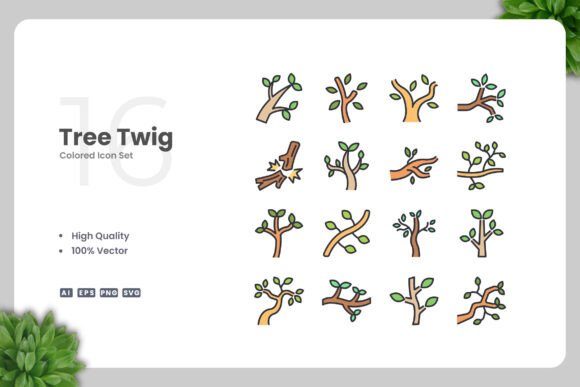
The first impression of Tree Twig Colored Icons is undeniably refreshing. In a market saturated with overly complex floral arrangements and dense, heavy fills, this design offers a breath of fresh air. The mood it creates is organic yet structured. It feels grounded, perfect for brands that value nature, sustainability, or a minimalist aesthetic. The shape is straightforward, avoiding unnecessary flourishes, which suggests a high level of practicality. For an embroidery designer, this visual personality screams versatility. It doesn't just sit there; it invites adaptation.
From Digital Vector to Stitched Reality
When I first received the file, the description noted its suitability for websites, mobile apps, and infographics. However, my mind immediately shifted to the physical realm. How would these clean lines hold up under the tension of a needle? The key here is the "simple and clean" nature of the design. In the world of machine embroidery, complexity is often the enemy of clarity. Tree Twig Colored Icons avoids the pitfalls of tiny, intricate details that tend to disappear on textured fabrics.
I decided to put this design to the test with a specific scenario: creating a line of custom embroidered tote bags for a local artisan market. The goal was to produce a product that looked professional but retained a handmade charm. The challenge with many icon sets is that they are too small or too thin to carry weight on a canvas bag. Fortunately, because this is a vector-based graphic, resizing became a non-issue. I could scale the twig icons up to fit the center of a large tote or down for a smaller pocket accent without losing the integrity of the shape.
Imagine the finished product: a sturdy cotton tote bag featuring a subtle, multi-colored tree motif. The colors can be easily edited to match a brand palette, allowing for endless customization. Whether you are an Etsy seller looking to create a cohesive shop brand or a hobbyist making personalized gifts, the ability to change color digitally before converting to an embroidery file is a massive advantage. It means you aren't stuck with a single thread combination. You can experiment with earthy greens and browns for a rustic look or vibrant pastels for a nursery theme.
Where Tree Twig Colored Icons Shines
This design is not limited to just one type of garment or accessory. Its clean geometry makes it an excellent candidate for various applications. For instance, consider a custom sweatshirt for a small business owner. A large, bold version of the twig icon on the back could serve as a statement piece, while smaller iterations could work perfectly on the sleeve or chest area. The design's scalability ensures it looks intentional regardless of size.
Baby items are another natural home for Tree Twig Colored Icons. The soft, organic lines are gentle and appropriate for infant wear. Picture a baby onesie or a receiving blanket adorned with these stitched branches. Because the design lacks sharp, aggressive angles, it feels safe and comforting. Similarly, for holiday gifts, these icons can be adapted into festive themes. Swap the standard green threads for reds and golds, and suddenly you have a unique ornament or a decorative pillow cover that stands out from mass-produced store-bought items.
For those running a craft business, the potential extends to branded merchandise. An embroidered patch featuring these icons could be sold as a standalone item or used to decorate aprons and kitchen towels. The clean lines ensure that even when stitched densely, the image remains recognizable. This clarity builds customer trust; buyers appreciate designs that look crisp and well-executed, rather than blurry or misshapen. When your finished product looks professional, it elevates the perceived value of your entire shop.
Caution Areas and Technical Considerations
While the potential is high, no design is without its challenges. As an experienced reviewer, I must point out where Tree Twig Colored Icons requires careful handling. If you plan to use this on a curved surface, such as a baseball cap, you will need to pay close attention to the digitization. Curved surfaces distort flat designs, and while simple shapes generally handle curves better than complex ones, the tension of the fabric can still cause issues if not stabilized correctly.
Texture is another factor to watch. On heavily textured fabrics like chunky wool or thick fleece, very fine lines might get lost in the weave. Conversely, on thin, stretchy fabrics like jersey knits, the stitch density needs to be managed carefully to prevent puckering. If the design includes small lettering or extremely detailed corners, these areas should be inspected closely. Tiny details often require a smaller hoop size, which limits the stability of the fabric during stitching. Always test the design on scrap fabric first to see how the stitches interact with your specific material.
Dense stitch areas can also pose a problem if the design is converted poorly. If the fill stitch is too tight, the fabric may become stiff and uncomfortable, particularly on clothing that will be worn frequently. For products that need frequent washing, such as aprons or kitchen towels, ensuring the design is secure and the thread quality is high is essential. The longevity of the finished product depends on these technical choices.
Practical Notes for the Embroidery Designer
To get the most out of this asset, I recommend a few practical steps before committing to a full production run. First, always check the thread color contrast against your chosen fabric. A light gray twig on a white shirt might vanish, whereas a dark brown on a beige background will pop. Reviewing the design in black and white mockups can help visualize this contrast effectively.
Confirming the hoop size is crucial. Ensure that the design fits within your machine's capabilities without requiring excessive trimming or re-hooping. If you are using a stabilizer, choose one that matches the fabric weight; a cut-away stabilizer is usually best for woven garments like tote bags, while a tear-away might suffice for lighter materials. Don't forget to inspect small details after stitching. Sometimes, what looks perfect on screen can suffer from thread breaks or loose ends in reality.
Finally, verify the licensing terms. Many designers assume that purchasing a digital file grants them unlimited rights to sell finished goods. However, some licenses restrict commercial use or limit the number of units you can produce. Confirm whether you can use Tree Twig Colored Icons for both personal projects and commercial ventures. This step protects your business and ensures you are operating ethically.
In conclusion, Tree Twig Colored Icons is more than just a pretty picture for a website. It is a functional, adaptable asset that can elevate your embroidery projects from simple crafts to professional-grade products. Whether you are decorating a baby's room, launching a new line of eco-friendly tote bags, or adding a touch of nature to a holiday gift, this design offers the flexibility and clarity needed for success. By understanding its strengths and respecting its limitations, you can turn a simple vector graphic into a stunning, tangible piece of art that customers will love.